La specifica sotto è la descrizione pubblicata in inglese.
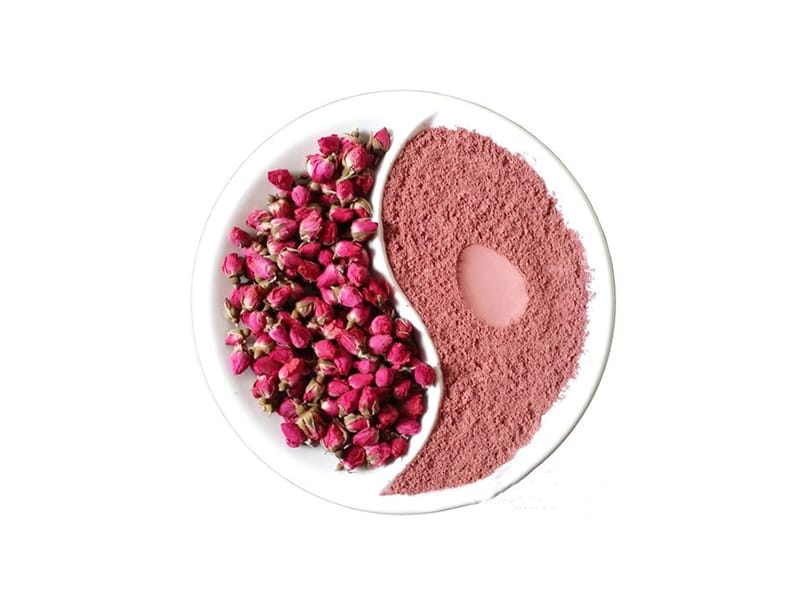
Rose powder is typically made from edible rose petals (such as double-petaled red roses or Damask roses) through low-temperature drying and grinding, or through extraction processes.
It not only retains the captivating fragrance of roses but also concentrates various bioactive substances beneficial to the human body.
As a result, it has become a star ingredient in the women's health and beauty market.
1. Creative Tea and Coffee Drinks
Floral lattes and milk teas use rose powder as a core ingredient in making “rose lattes” or “rose milk foam.”
It gives drinks a natural light pink color and a sophisticated woody floral aroma.
It is also a staple ingredient in modern tea shops.
>Rose Instant Drinks: Often combined with brown sugar, ginger powder, donkey-hide gelatin, or honey to create instant nutritional drinks targeting the female market.
2. Baking
Coloring and Flavoring for Baked Goods: Widely used in rose mille-feuille, rose flower cakes, macarons, and water chestnut cakes. It can replace artificial colors, providing a very natural pink effect.
3. Personal Care and Cosmetics
Natural Face Masks and SPA Treatments: Rose powder is a preferred ingredient for DIY face masks and facial treatments in beauty salons. It has pore-tightening, moisturizing, and soothing effects on sensitive skin.
Personal Care Products: It provides a natural exfoliating effect and releases a long-lasting fragrance, enhancing the bathing experience.
4. Dietary Supplements (Nutraceuticals)
Oral Beauty Products: Rose powder is often made into beauty capsules, tablets, or oral liquids, promoting the concept of "beauty from within" and "oral fragrance."